








.
AI_133px.jpg
ai
Artificial Intelligence
.
biotech
biotech
Biotechnology and Synthetic Biology
.
cryptography
crypto
Cryptography and Computer Security
.
Sustainable-Energy-Technologies_133px.jpg
energy
Energy Technologies
.
materialscience
nano
Materials Science
.
neuroscience
neuroscience
Neuroscience
.
Quantum Technologies
.
robotics
robotics
Robotics
.
semiconductor
semiconductors
Semiconductors

KEY TAKEAWAYS

•   A burgeoning “NewSpace” economy driven by private innovation and investment is transforming space launch, in-space logistics, communications, and key space actors in a domain that until now has been dominated by superpower governments.

•   Space is a finite planetary resource. Because of dramatic increases in satellites, debris, and geopolitical space competition, new technologies and new international policy frameworks will be needed to manage the traffic of vehicles, prevent international conflict in space, and ensure responsible stewardship of this global commons.

•   The Trump administration has shifted priorities heavily toward human exploration of the Moon and Mars. This is at the expense of robotic exploration, space science, and aeronautics missions, leading to significant planned budget and personnel cuts to NASA. This trend may risk the long-term superiority of the United States in the global race for talent and technology.

Space

Overview

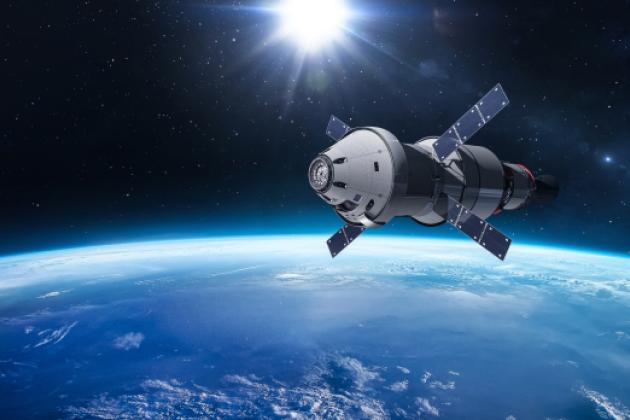
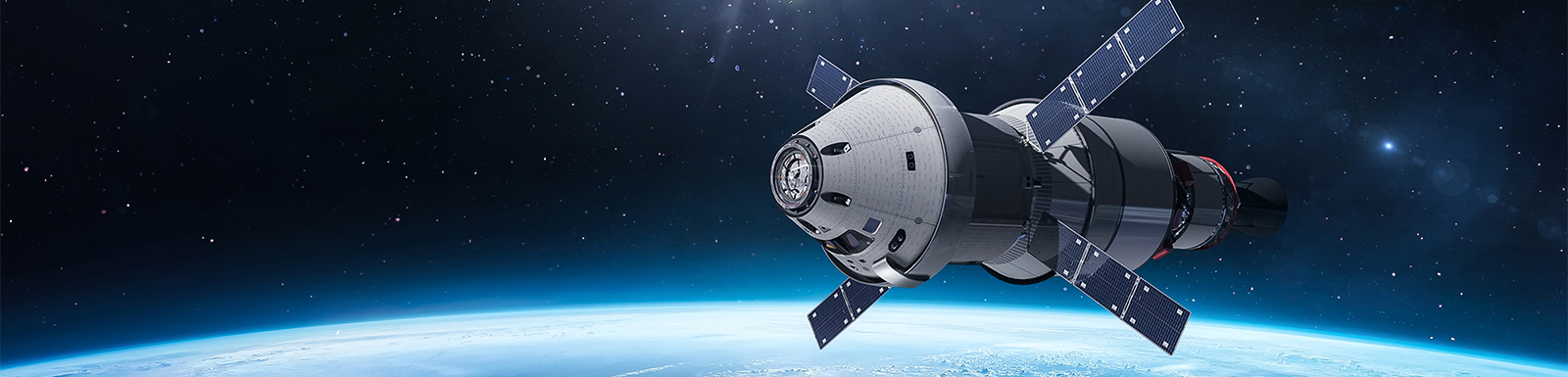
Space technology is any technology developed for the purpose of conducting or supporting activities above an altitude of one hundred kilometers (the so-called Kármán line). Space systems can be crewed (e.g., the soon-to-bedecommissioned International Space Station [ISS], SpaceX Dragon) or uncrewed (e.g., telecommunication and navigation satellites). They also vary in size from large structures like the ISS (with a mass of 420 tons) to small and micro-satellites that can weigh less than ten kilograms (kg). Today, most functional satellites weigh between 100 and 1,000 kg. 

Space systems are commonly positioned in low Earth orbit (LEO), medium Earth orbit (MEO), high elliptical orbit (HEO), or geosynchronous orbit (GEO). They are also sometimes positioned around Lagrange points, or locations in space where a spacecraft can remain in a fixed spatial relationship to two bodies, such as the Sun and Earth, or Earth and the Moon.


KEY DEVELOPMENTS 

Impacts of Space Technologies Space technologies have proven their value to the national interest in applications for positioning, navigation, and timing services, such as GPS, satellite communications, remote sensing, and national security.

Trends in Space Technology One important development is the rise of a “NewSpace” economy driven by private companies. While legacy systems are characterized by large, expensive spacecraft with long development timelines, new privatized space technologies are more accessible and less expensive. Companies like SpaceX, Rocket Lab, Blue Origin, and Virgin Galactic are advancing reliable space launches and innovative vehicles, with SpaceX’s Starship poised to cut costs by ten to one hundred times for reaching LEO. Blue Origin, Voyager Space, and Axiom Space are developing commercial space stations to succeed the ISS after its decommissioning in 2030. Governments are complementing their remote sensing satellites with private ones.

As the “NewSpace” economy continues to grow, nations are embarking on a new “race to the Moon” focused on establishing a lunar presence for strategic and economic advantages. In 2023, India became the first nation to touch down near the lunar south pole—a prime target for settlement—and in 2024, China became the first nation to land on the Moon’s far side.
 

Over the Horizon

Advances in Small Satellite Technology NASA is advancing technology demonstrations that explore the potential for small satellites to work together in swarms to achieve mission goals. In 2024, its Starling mission became the first successful in-orbit example of several critical autonomous swarming technologies.

New Applications of Space Technologies Future applications might include manufacturing of materials like pharmaceuticals, optics, and semiconductors in space; mining of the Moon and asteroids; harnessing of solar energy and beaming it to Earth; increased presence of military assets in space; and in-space logistics, servicing assembly, and manufacturing capabilities.

There will also be advancements in space exploration. As spacecraft fly ever farther from the Sun, they will need novel forms of propulsive energy, such as sources driven by nuclear reactions. Better propulsion systems will also be needed to intercept interstellar objects so samples can be collected from them.


POLICY ISSUES

Shift in US Executive Branch Priorities

The Trump administration has proposed budgets for space that aim to bolster human exploration to the Moon and Mars and which have imposed significant cuts to numerous ongoing and planned scientific missions related to interplanetary exploration, aviation, and space science. This has led to reductions in funding and personnel at NASA. These policies may put the United States at a competitive disadvantage relative to China and other global powers.

The Grand Challenge of Sustainability

The growing use of space to support sustainability and security on Earth will lead to more adverse impacts on the space environment. Even benign constellations of satellites, such as those used for remote sensing and object tracking, will contribute to greater space traffic challenges. New domestic and international policies are needed for tracking objects.

The number of active satellites rose from about 1,000 in 2014 to around 10,000 in 2024, and there are around 170 million total pieces of debris larger than one millimeter in size in orbit. The risk of collision between these objects is growing. Such collisions can produce a cloud of debris that will remain in orbit (a phenomenon known as the Kessler syndrome) and potentially close off access to space.

Space Governance

The release of NASA’s strategy for sustainability in space activities in Earth orbit and the issuing of the first-ever fine by the Federal Communications Commission for improper satellite disposal from geostationary orbit are notable developments in space governance, but short-term policy advances must be unified with a longer-term vision to address the responsible use of space. The Artemis Accords, signed by fifty nations (but not Russia or China), provide principles for the peaceful use of lunar resources.

Geopolitics, Security, and Conflict in Space

Evidence suggests that international norms established in the Outer Space Treaty (OST) are eroding. In 2024, Russia vetoed a United Nations resolution to prohibit nuclear weapons in space (already prohibited by the OST, to which it is a signatory) and is suspected of developing a nuclear-armed satellite that would violate the treaty. Further, there are concerns that nations might disregard OST provisions prohibiting claims of lunar sovereignty.

Another issue relates to nonnuclear anti-satellite (ASAT) weaponry and capabilities. To date, four nations have tested weapons capable of destroying or interfering with satellites in space: China, Russia, India, and the United States. ASATs are a major concern, as tests or actual use of them threaten peaceful operation of satellites, space stations, and other space activities and increase the likelihood of the Kessler syndrome emerging.

Finally, the US government’s dependence on space capabilities provided by a very limited number of companies controlled by a single individual raises important policy questions of how to ensure that US space efforts align with US national interests.


REPORT PREVIEW: Space

Faculty Council Advisor

simone-damico_profilephoto.jpg
Simone D’Amico
Author
Simone D’Amico

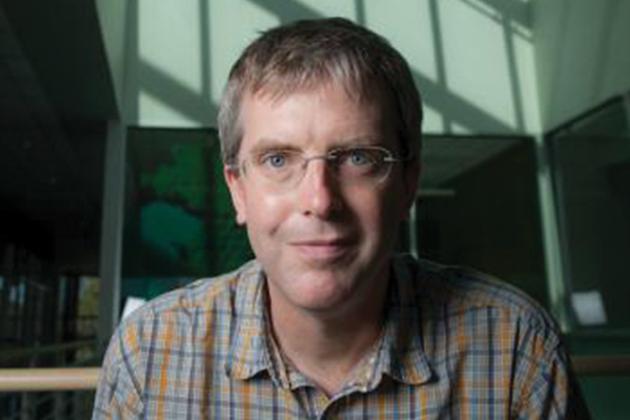
Simone D’Amico is associate professor of aeronautics and astronautics and professor, by courtesy, of geophysics at Stanford University, where he serves as the W. M. Keck Faculty Scholar of Engineering. His research explores the intersection of advanced astrodynamics, spacecraft navigation and control, autonomous decision making, and space system engineering. He currently leads satellite swarm and formation-flying projects for NASA and the National Science Foundation. He received his PhD in aerospace engineering from Delft University of Technology.

View Bio
simone-damico_profilephoto.jpg
Simone D’Amico

Simone D’Amico is associate professor of aeronautics and astronautics and professor, by courtesy, of geophysics at Stanford University, where he serves as the W. M. Keck Faculty Scholar of Engineering. His research explores the intersection of advanced astrodynamics, spacecraft navigation and control, autonomous decision making, and space system engineering. He currently leads satellite swarm and formation-flying projects for NASA and the National Science Foundation. He received his PhD in aerospace engineering from Delft University of Technology.

Access the Complete Report

Read the complete report.

Explore

Date Range
CONTENT TYPE

Select Content Type

  • News
  • Article
  • Videos
  • Podcasts
  • Events
AUTHORS

Select Author

  • Condoleezza Rice
  • John Taylor
  • Jennifer Widom
  • Amy Zegart
  • Herbert Lin
  • Hon. Jerry McNerney
  • Hon. Robert Gates
  • Hon. Steven Chu
  • Hon. Susan M. Gordon
  • John Hennessy
  • Lloyd B. Minor
  • Mary Meeker
  • Peter Scher
  • Thomas M. Siebel
  • Zhenan Bao
  • Dan Boneh
  • Yi Cui
  • Simone D’Amico
  • Drew Endy
  • Siegfried Glenzer
  • Mark A. Horowitz
  • Fei-Fei Li
  • Allison Okamura
  • Kang Shen
  • Eric Schmidt
  • Steven Koonin
  • Sally Benson
  • Norbert Holtkamp
  • Martin Giles
  • Jon Simon
FOCUS AREAS

Space

  • Artificial Intelligence
  • Biotechnology and Synthetic Biology
  • Sustainable Energy Technologies
  • Cryptography
  • Materials Science
  • Neuroscience
  • Nuclear Technologies
  • Robotics
  • Semiconductors
  • Space
  • Technology Test Page
  • Lasers
  • Artificial Intelligence
  • Biotechnology and Synthetic Biology
  • Cryptography
  • Materials Science
  • Neuroscience
  • Robotics
  • Semiconductors
  • Sustainable Energy Technologies
  • Space
  • Artificial Intelligence
  • Biotechnology and Synthetic Biology
  • Cryptography and Computer Security
  • Materials Science
  • Neuroscience
  • Robotics
  • Semiconductors
  • Space
  • Energy Technologies
  • Quantum Technologies
Date (field_date)
Read More
Space
Article
Books
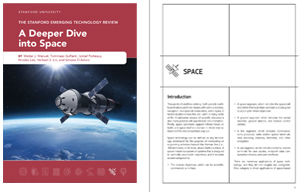
A Deeper Dive into Space

Stanford University experts survey the aeronautics and astronautics research landscape on campus, covering topics including multisatellite autonomy; in-space logistics, servicing, assembly, and manufacturing (ISAM); space sustainability; spacecraft systems and…

June 17, 2024 by Herbert Lin, Simone D’Amico
Read More
Semiconductor Day at the Hoover Institution
News
Books
Experts, Diplomats, and Industry Representatives Discuss US Semiconductor Future after Passage of CHIPS Act

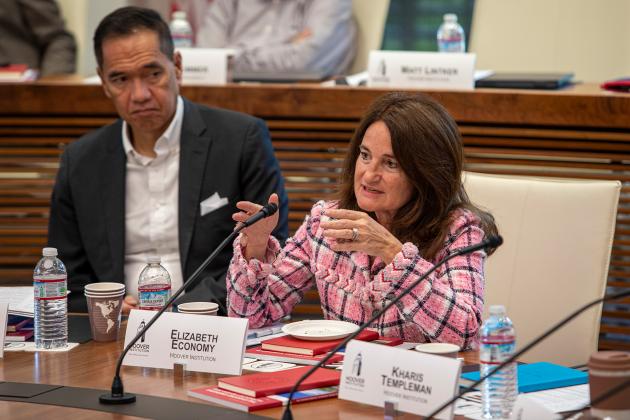
As dollars from the CHIPS and Science Act flow to strengthen the US semiconductor industry, senior leaders from the US government, industry, academia, and international partners met at the Hoover Institution to discuss current challenges and the field’s next…

June 13, 2024
Read More
SETR_CongressionalFellowship
News
Books
Stanford Emerging Technology Review Congressional Fellowship Program

The Hoover Institution and Stanford School of Engineering appreciate the important role of Congressional staff as they advise Members on the critically important policy issues that routinely come before Congress.

March 21, 2024
Read More
Space Innovation Roundtable
News
Books
Senior Leaders in Government, Industry, and Academia Convene for Discussions on Space Innovation and Commercial Integration
March 08, 2024
Read More
Artificial Intelligence
News
Books
US Wants Cloud Firms to Report Foreign Users Building AI

US Commerce Secretary Gina Raimondo said her department is exploring how to force cloud companies to disclose when a foreigner taps their computing power to fuel artificial intelligence applications, signaling the next phase of the tech war between Washington…

January 26, 2024
Read More
artificial intelligence
News
Books
Raimondo considers cloud reporting rules for foreign AI developers

Commerce Secretary Gina Raimondo said Friday that she is considering requiring cloud server providers to report details on whether foreign users are developing artificial intelligence models, an extension of the Biden administration’s efforts to institute AI…

January 29, 2024
Read More
artificial intelligence
News
Books
OpenAI and Other Tech Giants Will Have to Warn the US Government When They Start New AI Projects

The Biden administration is using the Defense Production Act to require companies to inform the Commerce Department when they start training high-powered AI algorithms.

January 26, 2024 by Condoleezza Rice, Fei-Fei Li
Read More
technologyiStock-1328282379
Videos
Books
Commerce Secretary and Others on AI and Innovation

Commerce Secretary Gina Raimondo, former Secretary of State Condoleezza Rice, and Stanford University computer scientist Fei-Fei Li discussed artificial intelligence and technological innovation at an event hosted by the Hoover Institution in Washington, DC.…

January 26, 2024 by Condoleezza Rice, Fei-Fei Li
Read More
SETR
News
Books
Stanford Emerging Technology Review Launches in Washington DC

Contributor scholars, Stanford engineers all, of the Stanford Emerging Technology Review brought their insights to the nation’s capital last week, launching the initiative with events in the nation’s capital.

January 29, 2024
Read More
technologyiStock-1328282379
Events
Books
A Conversation On The State Of Scientific And Technological Innovation

The U.S. Department of Commerce, together with the Hoover Institution and Stanford School of Engineering, invite you to a conversation on the state of scientific and technological innovation and the launch of Stanford Emerging Technology Review at JP Morgan…

January 26, 2024

You May Also Like

.
Director Rice, Senators Coons, and McCormick in conversation during their panel session.
The 2026 Stanford Emerging Technology Review Debuts In The Nation’s Capital
.
SETR 2026 Cover
2026 Edition Of The Stanford Emerging Technology Review Offers Policymakers And Business Leaders New Insights Into The Implications Of Frontier Technologies.
.
Drone
Technology Applications By Policy Area
.
Globe
Cross-Cutting Themes
.
Binary
Foreword
.
Stanford
Executive Summary
overlay image